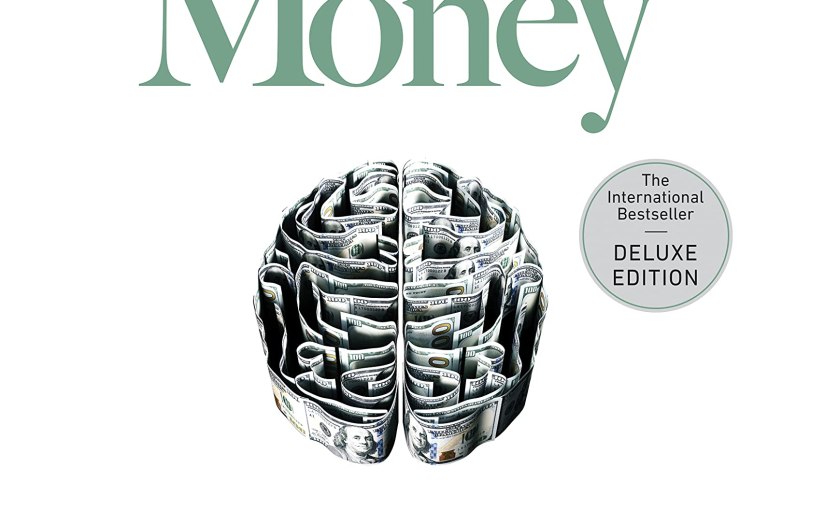
Ever so once in a while a self-help/management book is not just engrossing but something you can relate to with the author – and psychology of money by Morgan Housel is one such book. While I did hear of this book being quite a success I had a big backlog of books and so it took a while to get to this one.
At the outset I must confess what I expected and what the book turned out to be was totally different but must admit it was much better and enjoyable than what I anticipated – for anyone wanting tips on how and where to invest this is not the book but if one wants to get views on how to look at money and wealth there are a lot of fantastic perspectives to assimilate.
Here are a few callouts and takeaways
The example of Bill Gates and two of his friends best describes the role of chance and luck – apart from, of course, hard work, innovation, creative thinking et al. It was about one in a million) or something in that range) chance that Gates and his friends were the select few to have studied in a school that had a computer and one of the friend died in a mountain accident which in itself was a remote possibility. So here was chance that two of them made it big and the other – who was regarded to be equally good – not seeing to light an organisation that disrupted the industry.
Continuing the thoughts on luck and risk, the author mentions that studying either people who made it big or some disastrous examples is probably not the right approach as there could be multiple factors including chance and context; so studying broad parameters is much better which, in a sense, takes out some of these extremes. The point that The line between foolishness and great moves could be a mm thick will stick with me for a while. An extension to the above is where the author expands to say that time, place and context play a major role and who can disagree with the statement that “everyone who is successful is not hard-working and anyone who is poor is not lazy”!
In terms of money and satisfaction the statement “One who is in control of his/her time is happiest” is profound and cannot be truer. The statement by Joseph Heller when told that a hedge fund manager made more money in a day than the sales of his book Catch 22 that he had one thing that the hedge fund manager did not have – enough – simply wow! Continuing this theme, the best example is about how Rajat Gupta and Rajaratnam threw away power and money and Warren Buffet puts it best that why throw away everything for what you don’t have and need to what you have and need.
One more gem from the book is about how modern capitalism generates wealth and envy. The ceiling of social comparison is so high virtually no one will ever hit it and the only way to win is not to fight to begin with and accept we have enough even if it is less than what others have around you.
Probably one of the three real pieces of advice is about how money compounds and so it is all about investing early and for a long time. The illustration of glaciers was nice and even better how Warren Buffet would have been 99% less rich had he started at 30 instead of 10 and retired at 60 – the power of compounding at its best. If I am not wrong Albert Einstein said something akin to compounding to be the most powerful thing.
The second piece of advice is about how getting wealthy and staying wealthy are two different things and while for the former we may need to be aggressive but for the latter to be true it is about being conservative. While many may disagree I found the statement “being wealthy is not having those diamonds…” quite interesting. The final piece of advice is taking a portfolio approach and it is about a small portion giving an inordinate return.
Whenever I listen to the views of analysts recommending specific stocks or asset classes I always wonder as to who the persona being addressed to is and that is exactly what the author says that there is no one recommendation as someone for the long term would have different goals to that of a day trader.
A few more gems in the book
• We make mental models and live with those – most important to note is we don’t know a lot.
• Why do people like to believe in forecasts – because people want to believe that we live in a predictable controllable world and we look to authoritative sounding people to satisfy that need.
• risk is what is left over when you think you thought of everything!
• The illusion of control is more persuasive than the reality of uncertainty.
One point that I want to dig deeper is the concept of “margin for error”, which will help in managing risks better.
Now towards the end of the book is where the author resonated the most with me. His views in life about The ability not to be flashy and be humble; Not wealthy but to be independent – independent to decide what I want to when I want to – are things that I fully subscribe to but to get to the latter point guess I am still a few years away!
I will not be overstating the point when I say that the independence to choose what we want to do in life and being in control of time is absolutely prime for me and this book has just made that clearer to me…

 Nidugondi Speak